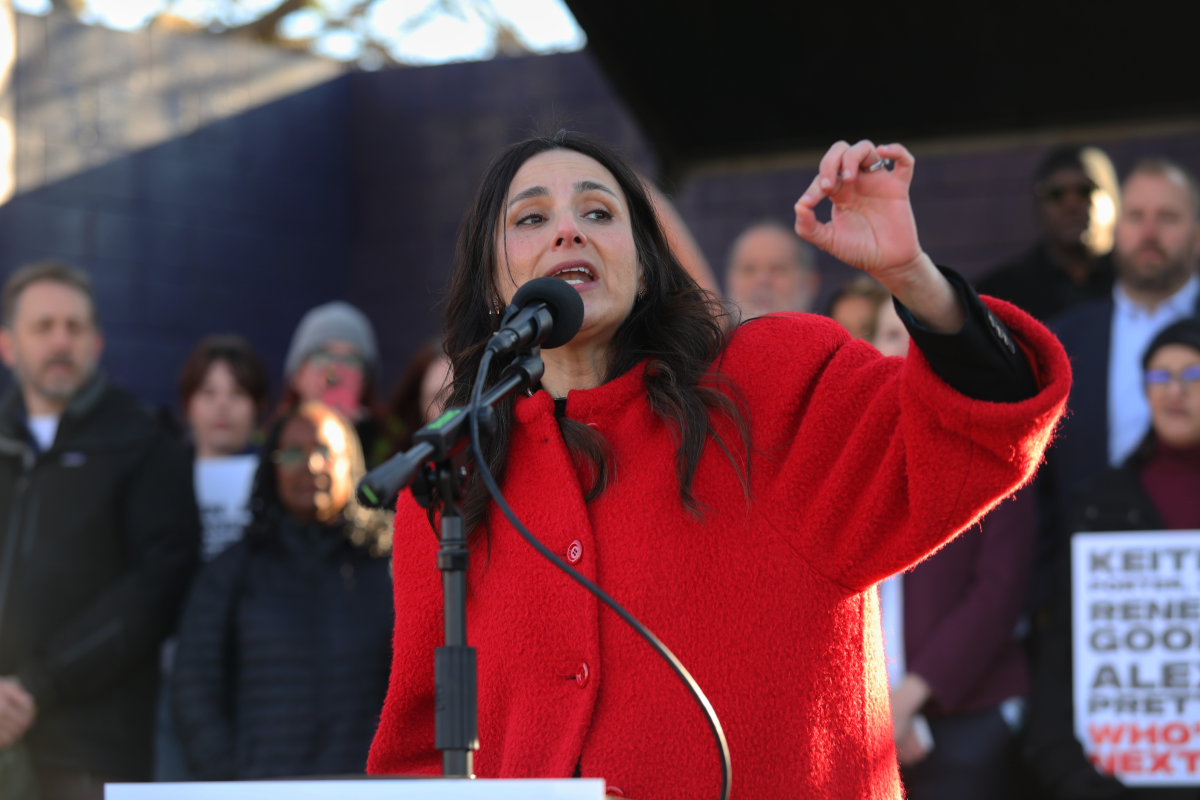
The possibility of receiving $1,500 in Texas gained momentum again after the elections on November 3. Gina Hinojosa won the governorship, and one of her main economic promises was to deliver a one-time payment to every household in the state. However, there is one thing you should be clear about: the check has not yet been approved and there is no date to receive it.
The proposal aims to use $17,000 million of the so-called Rainy Day Fund, a public money reserve that Texas keeps to face financial problems and emergencies. Hinojosa argues that a portion of those resources should be returned to the families living in the state.
As The Texas Tribune explained when it presented the plan in July, the estimated cost would be $17 billion. The intention is to retain about $10 billion in the reserve and distribute the rest through $1,500 payments per household.
The electoral victory brings Hinojosa closer to the possibility of advancing the initiative, but it does not mean the government can start sending checks.
What is needed to approve the $1,500 check in Texas?
The main hurdle lies in the state Legislature. To withdraw money from the Rainy Day Fund for purposes other than covering a budget deficit, the Texas Constitution requires the backing of two-thirds of the legislators present in each chamber.
This means that Hinojosa cannot authorize the payment on her own. She needs both the House of Representatives and the state Senate to approve the measure.
The Houston Chronicle reported that the legislative outlook could complicate the plan: although Democrats are on track to control the House, Republicans would maintain a majority in the Senate. Therefore, obtaining the necessary votes will be a significant political negotiation.
The next regular session of the Legislature will begin on the January 12, 2027, according to the Texas Legislative Reference Library. That will be a key date to determine whether the promise starts turning into a bill.
Who could receive the $1,500 payment?
Hinojosa’s original proposal called for delivering a single check to each Texas household, not $1,500 per person. For example, a four-member family would receive $1,500 in total, not $6,000.
However, important rules are still missing. It has not yet been officially defined which documents households must present, how each family would be identified, or what would happen to people who share a dwelling.
There is also a relevant question for the Hispanic community: could undocumented immigrants living in Texas receive it?
During the campaign, Hinojosa acknowledged that eligibility requirements would have to be defined by legislation. For now, there is no definitive answer that would guarantee all residents, regardless of their immigration status, will receive the money.
When could the checks reach the families?
For now, there is no payment schedule or open applications. First, an initiative that establishes the program’s conditions and authorizes the use of state resources would have to be introduced and approved.
You can track the progress of any project on the official Texas Legislature portal. It is also advisable to check announcements from the State Comptroller’s Office, which manages information about public finances.
The $1,500 payments remain a campaign promise, not a guaranteed deposit. For families budgeting every dollar, the difference matters: until a law is enacted and rules published, it is not wise to include that money in the household budget.
¿Todavía puedes recibir un cheque de hasta $500 dólares de Georgia?
¿Te rechazaron una solicitud de SNAP? Todavía podrías tener una opción para recibir ayuda