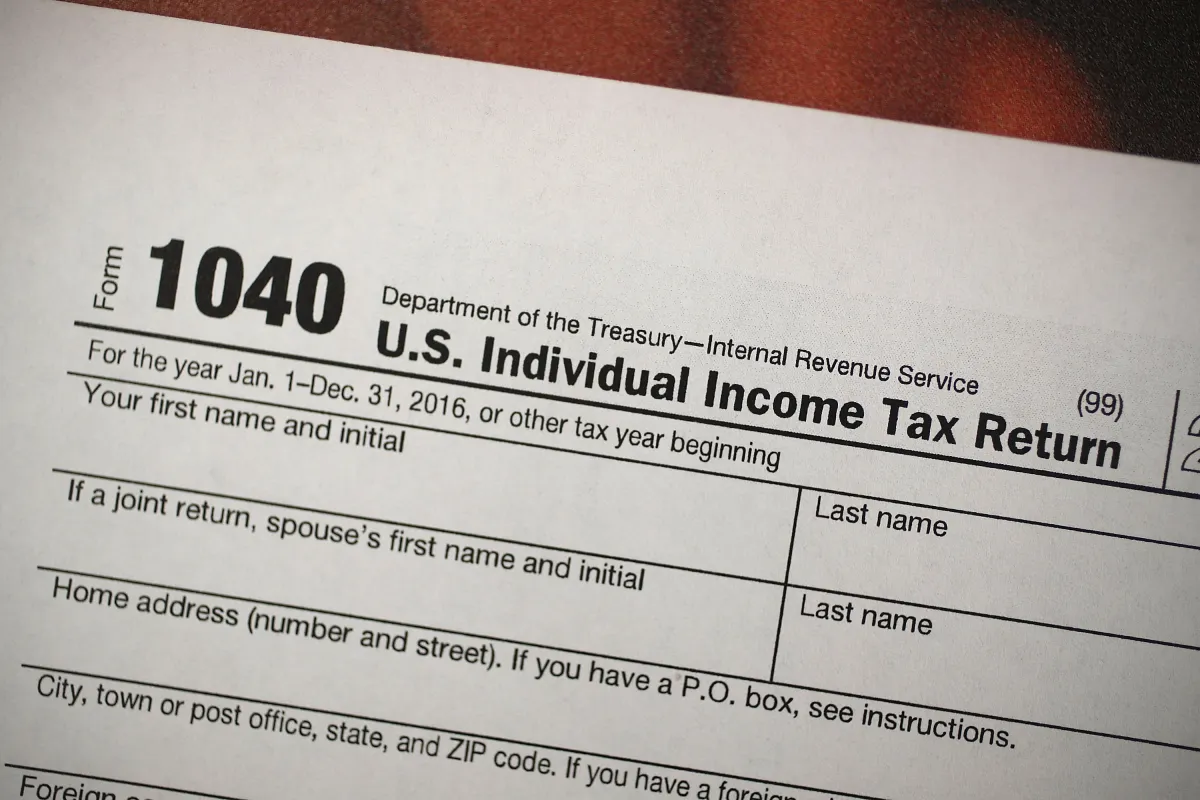
If you file your taxes in the United States every year, Form 1040 could present you with a question you’ve never had to answer before. The IRS published in September 2026 a draft proposing to request information about citizenship or legal work authorization for taxpayers and their spouses. The change could take effect during the 2027 tax season, but it is not final yet.
The proposal deserves particular attention if you have a Green Card, file with an ITIN, or share your home with family members of different immigration statuses. It also raises questions about access to certain tax credits.
What would change in the IRS Form 1040 for 2027?
The draft Form 1040 for the 2026 tax year includes a new question in the Additional Information section.
The IRS wants to know whether, at the time you file your return, you are a U.S. citizen, a U.S. national, or a foreign national legally authorized to work in the country.
If you file a joint return, you and your spouse would have to answer separately.
According to USA Today, the proposal is part of changes that the Treasury Department and the IRS are considering to verify who meets the requirements for certain tax benefits.
The question is not yet presented as a final obligation. The IRS itself warns that its draft forms may be modified before they are officially published.
What would happen if you file taxes with an ITIN or have a Green Card?
Here it is useful to distinguish two scenarios.
If you have a valid Green Card, you generally have legal authorization to work in the United States. Therefore, you do not need to be a U.S. citizen to answer affirmatively to the proposed question, as long as you meet its conditions.
The case of those who use a Taxpayer Identification Number (ITIN) requires more attention.
The IRS explains that the ITIN allows you to fulfill tax obligations, but it does not grant work authorization or change your immigration status.
Having an ITIN does not automatically mean you lack legal status, but it also does not prove that you are authorized to work.
If you use this number, you should review your particular situation before answering any new questions.
Could you lose your tax refund for not being a citizen?
The proposal is related to new verifications for certain refundable tax credits.
According to USA Today, the IRS also published a draft of Schedule 3-A, which contemplates additional eligibility statements for benefits such as the Earned Income Tax Credit and the Additional Child Tax Credit.
However, answering that you are not a U.S. citizen does not automatically mean you will lose all of your refund.
Your eligibility will depend on the credit you apply for, your income, your filing status, and the applicable legal requirements.
You should not confuse a refund of taxes withheld in excess with a refundable tax credit. They are different concepts.
How to prepare for the 2027 tax season?
Before filing your next return, you can take a few precautions:
You can review the drafts and the final versions on the IRS’s official forms page.
The upcoming tax season corresponds to the income earned in 2026. If the change is approved, you will have to answer the new question when filing that return in 2027.
For immigrant families, the most important detail is not to confuse the obligation to report income with the right to receive certain credits. The proposal could modify the information the IRS requests, but it does not by itself eliminate your tax responsibilities.