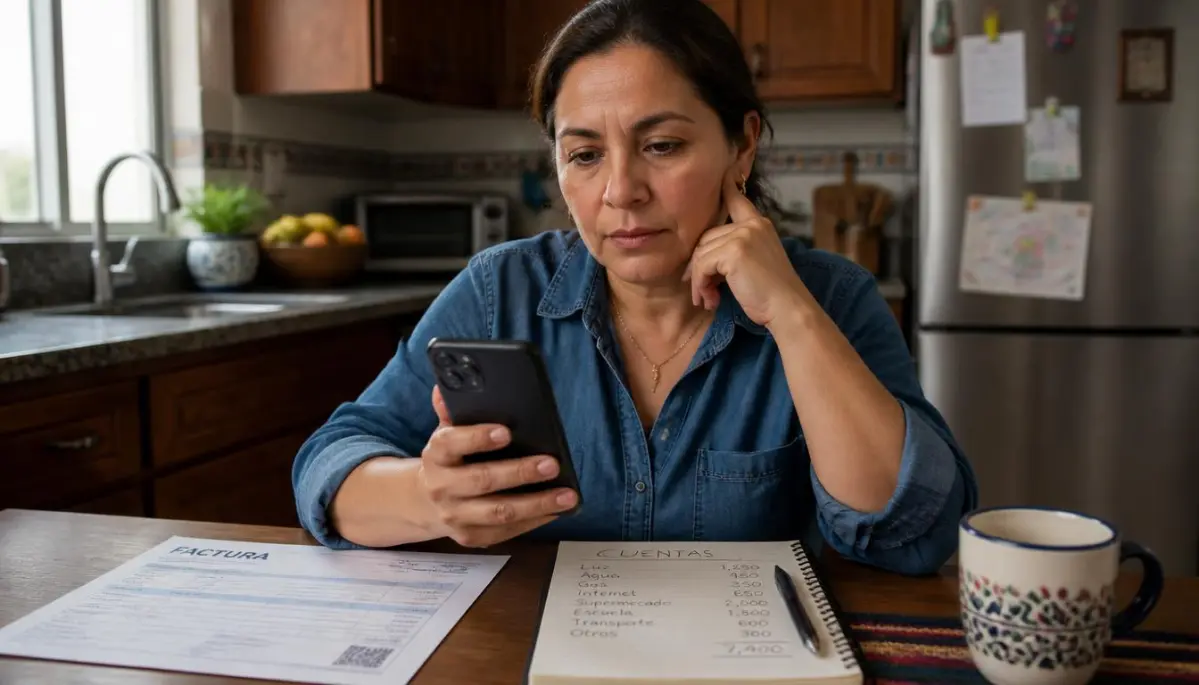
When you have little money in your bank account, every dollar counts. That’s why a seemingly small mistake can hurt a lot more than you might think: letting an automatic payment go through when you don’t have enough available balance.
It could be the electricity bill, the phone bill, car insurance, the monthly subscription, or any other scheduled charge. If funds aren’t enough, your bank might cover the transaction and charge you an overdraft fee.
The Consumer Financial Protection Bureau (CFPB) explains that an overdraft occurs when you don’t have enough money to cover a transaction and the financial institution decides to pay it anyway. Fees vary, but many banks and credit unions charge $30 or more per transaction.
And here comes the part that deserves attention: you can end up paying a fee that exceeds the amount you were originally short.
The mistake you can avoid when you have a low balance
If your account is nearly zero, it isn’t enough to look at how much money you have today. You also need to know what automatic payments are scheduled for the next few days.
The CFPB recommends knowing the dates and amounts of electronically authorized transfers in advance, such as rent, mortgage, or utilities. It also advises checking when deposits you’ve made will be available.
This last part is important. A deposit appearing in your account does not necessarily mean that all that money is available for use immediately.
How much can an overdraft cost you?
There isn’t a single federal overdraft fee that all banks must charge. Each institution sets its own charges based on the terms of the account.
But the CFPB notes that many institutions charge $30 or more for every transaction that triggers an overdraft. And some banks may apply several fees in one day, though certain institutions impose daily limits.
Imagine you have $25 available and a $40 bill is processed. If the bank covers the transaction and charges a $30 fee, the problem is no longer just that you were $15 short.
Now you have to cover the missing funds plus the fee.
Can you avoid an overdraft fee?
In certain cases, yes.
Federal rules state that, for single debit card transactions and ATM withdrawals, a bank cannot charge you an overdraft fee if you did not previously opt into that coverage.
But there is an important difference: this protection does not work the same way for checks and recurring electronic payments. In those cases you could face an overdraft fee or even an NSF (non-sufficient funds) charge, depending on your institution’s policies.
That’s why it’s worth reviewing what you have activated on your account.
The problem hits harder when the budget is already tight
Federal Reserve data show why this issue shouldn’t be treated as a simple matter of “managing money better.”
In its 2025 survey on the economic well-being of American households, the Fed found that 12% of adults with a bank account had paid an overdraft fee during the previous year. Among Hispanic adults with a bank account, the share was 17%.
When the budget is tight, a $30 or $36 fee isn’t a minor detail. It can represent a sizable portion of money set aside for groceries, gas, or an outstanding bill.
Three moves to protect your account
If you know your balance is low, you can:
The CFPB notes that linking an account can incur a transfer fee, but this could be lower than an overdraft fee. You can also ask about other protection options available at your bank.
And if you’ve already been charged a fee you don’t recognize or believe you didn’t authorize, first review your account terms and contact your financial institution. The CFPB also allows you to file a complaint when you have a problem with a financial product or service.
When you have little money in the bank, the goal isn’t only to avoid overspending. You also need to prevent an automatic charge from turning a small balance into an even bigger debt. Sometimes checking the next transactions five minutes ahead can save you dozens of dollars.