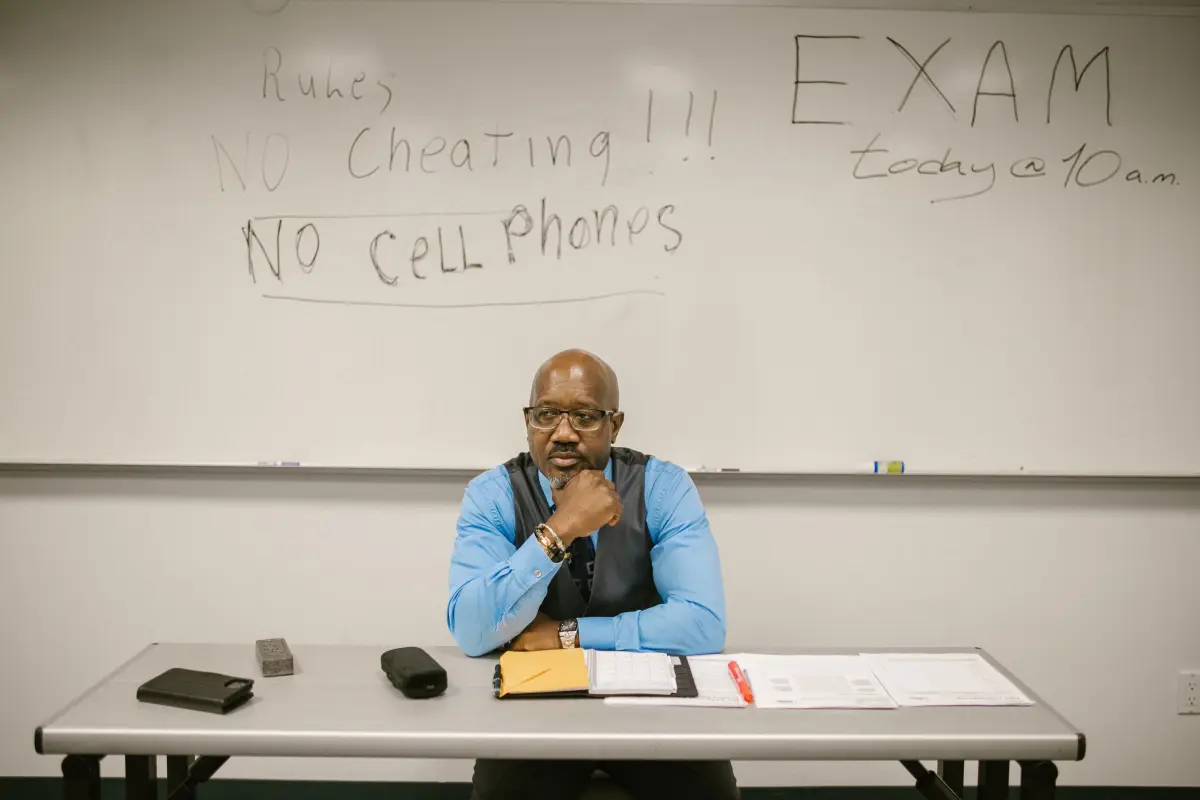
The American Families Plan, currently under discussion in Congress, envisions a number of benefits aimed at making education more affordable for American households. The architects behind this plan are the teachers. Today there is a shortage of them. Anticipating this situation, President Joe Biden outlined various supports in his American Families Plan to encourage more people to join the teaching workforce and to grant teachers in the country greater benefits.
According to the Learning Policy Institute, there is a downward trend in the number of teachers across the country. The American Families Plan includes a budget of $9 billion to address the shortage of these professionals. If this bill aims to provide a better education for every family’s children, then it is important to have enough teachers in the classrooms.
The Washington-based education policy experts noted that the demand for teachers outpaced supply for K-12 in more than 100,000 public schools in 2019. This data reinforces that the shortage problem predates the COVID-19 pandemic. However, a recent survey by the National Education Association found that almost 1 in 3 teachers has contemplated quitting or retiring early due to COVID.
While President Joe Biden’s American Families Plan contemplates a $1.8 trillion budget, $9 billion would be dedicated exclusively to addressing the teacher shortage, especially to training, equipping, and diversifying the knowledge that these professionals should possess.
With this money, the aim is to increase staffing so that more people study education and seek to join the country’s teaching ranks. It also seeks to persuade teachers already in the field to stay in the profession, not abandon it, and, moreover, to make it easier and less costly for teachers and professionals from other fields to obtain certification for in-demand specialties within teaching.
Almost a third, about $3 billion, would be allocated to the creation and expansion of the Grow Your Own program (Cultivate), which has the goal of recruiting, developing, and retaining teachers who are already in the community, as well as other teacher residency programs, particularly in areas with large populations of students of color.
Another $1.6 billion would be used to help grow the pool of in-demand educators, such as special education teachers and bilingual teachers, as well as $2 billion for support programs, such as formal mentoring programs for new teachers and teachers of color, aimed at helping keep existing teachers in the field.
However, experts note that the American Families Plan does not attempt to address low teacher salaries, one of the most important reasons behind the teacher shortage. A 2020 survey indicated that 67% of teachers have or had a second job “to make ends meet”.
Additionally, the decline in college students pursuing education majors is attributed to “low salaries” and “difficult working conditions.”
You may also be interested in:
• American Families Plan: would cost $700 billion more than estimated; will it be feasible to carry it out?
• Does the American Families Plan include a fourth stimulus check?
• According to Moody’s, the American Families Plan and the American Jobs Plan would pay for themselves in 15 years and would boost GDP by $1 trillion