Paying your credit card before the due date is a good habit. It helps to avoid late charges and, if you pay the full balance, it can allow you to take advantage of your card’s grace period.
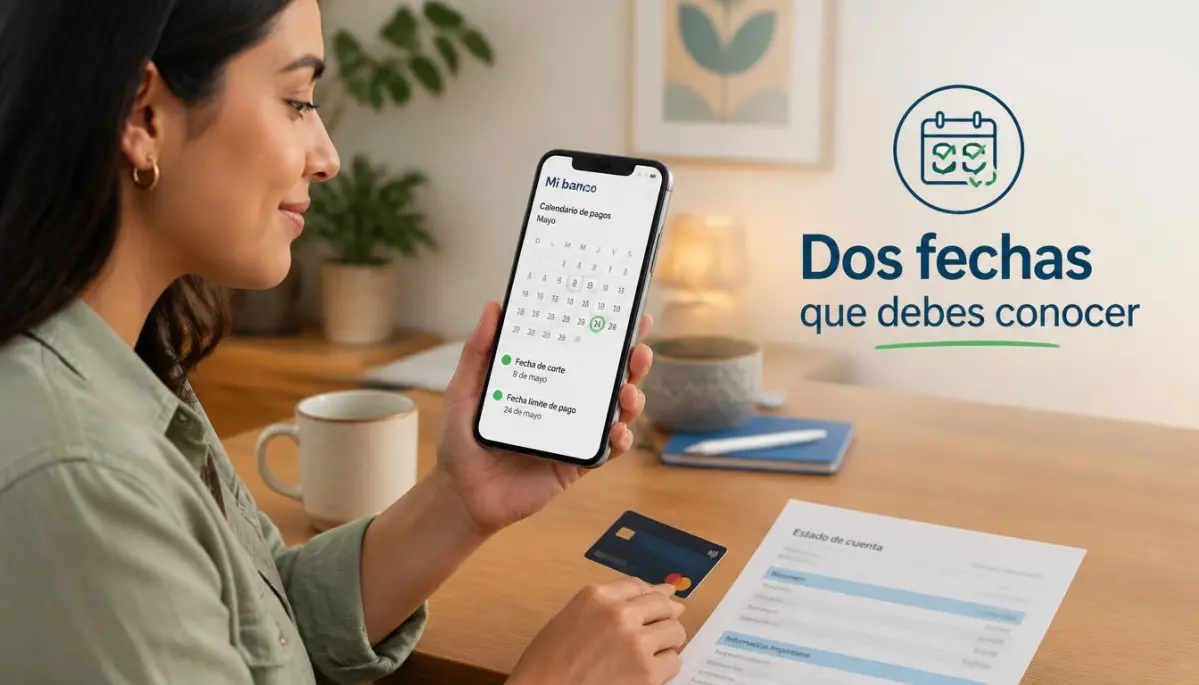
But there is a date that many people overlook and that can be just as important for organizing your payments: the statement closing date.
It’s not the same as the due date.
And if you use your card frequently, understanding that difference can help you decide when to pay, how much balance to leave, and how to prevent your card from looking more utilized than it really is.
The Consumer Financial Protection Bureau (CFPB) explains that the billing cycle is the period that covers each statement. When that cycle ends, the issuer calculates the corresponding balance and generates the bill that will later have a due date.
That’s the key.
What is the closing date of a credit card?
The closing date is, in simple terms, the day on which your billing cycle ends.
Everything recorded within that period will be part of the corresponding statement. After that, a new cycle begins.
The due date, by contrast, is the day your payment must have been received by the issuer to be considered on time.
The CFPB states that the due date appears on your statement and that, in general, it should be the same day of the month in each cycle.
What is the closing date of a credit card?
The closing date is, in simple terms, the day your billing cycle ends.
Everything recorded within that period will be part of the corresponding statement. After that, a new cycle begins.
The due date, by contrast, is the day your payment must have been received by the issuer to be considered on time.
Suppose you have a credit line of $5,000 and during the month you use $3,000. If you reach the closing date with those $3,000 outstanding, that could be the balance shown on your statement.
You can pay it off completely after and before the due date. That is positive for avoiding interest if you meet the conditions of your card.
But during part of the cycle your card was using a significant portion of your limit.
That’s why knowing your closing date helps you plan better.
Should you pay before the closing date?
There isn’t a universal rule that says you should always pay before the closing date.
If you have enough money and want to reduce the balance that will appear on the statement, you can make a payment before that date. But that doesn’t mean you should empty your bank account just to show a lower balance on the card.
Your priority should be something more basic: don’t spend more than you can pay and avoid being late.
The FTC recommends making card payments before the due date and, when possible, paying off the full balance to take advantage of the grace period and reduce interest costs.
The due date remains the one you can’t ignore
Here it’s worth clarifying because some strategies about the closing date can end up causing more confusion than help.
If you can remember only one date, remember the due date.
The CFPB notes that, in general, a payment should not be considered late if the issuer receives it before 5 p.m. on the due date, in the time zone shown on the statement. If that date falls on a Sunday or a holiday when the issuer does not accept payments by mail, there are specific rules for the next business day.
Also, it isn’t enough simply to initiate the payment that day. What matters is that the issuer receives it within the applicable window.
That’s why, if you use a bank transfer or an external service to pay your card, check how long processing takes.
How to know your closing date?
You don’t need to perform complicated calculations.
Check your statement or log into your card’s app. Look for terms such as:
Your card agreement should also explain how the billing cycle, the grace period, and payments work.
The CFPB explains that the statement should show information such as the balance, the minimum payment, and the due date.
A simple strategy to stay on top of dates
If you want greater control over your credit card, you can manage it with two separate reminders.
And there’s a fourth rule that may seem obvious, but is probably the most important: don’t spend money you need to pay rent, groceries, utilities, or other obligations just to get your card to close with a lower balance.
A card can be a useful tool. It can also quickly become expensive debt.
The difference often rests on who controls the calendar: whether you know it or you simply react when the payment date arrives.
What happens if you can’t pay the full balance?
Don’t panic, but don’t ignore the bill either.
If you can’t pay the full balance, try to at least cover the minimum payment before the due date. The CFPB warns that not making that payment can incur late fees and affect your credit history. Additionally, paying only the minimum can take much longer to pay off the debt and increase interest costs.
In other words: the closing date can help you manage your card better, but the due date remains essential to avoid delinquencies.
Official sources to consult
You can review directly the information from the Consumer Financial Protection Bureau (CFPB) about payment dates, billing cycles, and grace periods, as well as the Federal Trade Commission (FTC) recommendations on responsible use of cards.