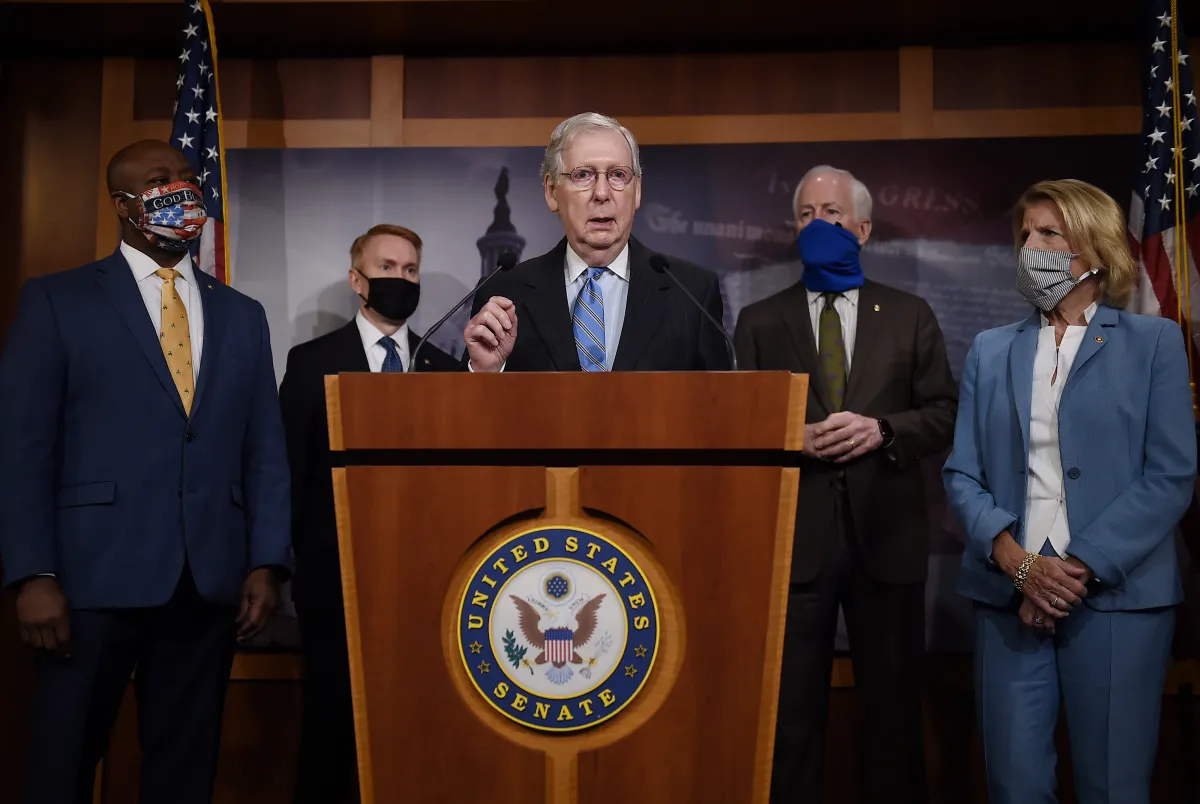
The Senate resumes business with a looming end-of-month government funding deadline and talks on a fifth coronavirus package stalled.
The senators will return to the Capitol on Tuesday afternoon for the first time since early August, while the House of Representatives will be out until next week, after extending its August recess through September 14. Lawmakers have only a few weeks to finish their work before they depart the city again and return after the November elections.
After weeks of daily phone calls, the Senate Republicans are trying to finalize a smaller second coronavirus bill that would include a weekly federal unemployment payment, another round of financing for the Paycheck Protection Program, more money for testing and schools, and liability protections against coronavirus-related lawsuits, reported reporter Jordain Carney in The Hill.
Senator John Barrasso, a member of the Republican leadership, and Treasury Secretary Steven Mnuchin have said they expect their fellow Republicans to unveil the Republican package this week.
“We have a focused and targeted solution that we expect the House to approve,” Barrasso said, adding that it was the “goal” to vote on the bill this week.
After weeks of discussions among the Democratic leaders in Congress, Mnuchin and White House chief of staff Mark Meadows, made no progress. The Republican senators are eager to vote on a bill, even if it is not sufficient.
Forcing a vote, they hope, will provide cover for vulnerable Republican senators trying to hold their seats as the virus has killed nearly 190,000 Americans, and it will also pressure Democrats to reopen negotiations.
The Republicans want a bill that can pass with 51 votes, a level of unity that has eluded the caucus in negotiations over another relief package.
“If we can reach a consensus on a package, I’m in favor of putting it on the floor and letting the Senate be the Senate,” said Senator John Kennedy.
The Senate Majority Leader Mitch McConnell has not said when he will unveil a second bill, and negotiations over a possible package continued through the weekend. McConnell could delay a vote on any possible coronavirus package until Thursday, unless senators reach an agreement to accelerate things.
In a letter to Senate Republicans, Senate Minority Leader Charles Schumer dismissed the Republicans’ call for a “skinny” bill. The bill, if Republicans vote for it, is not expected to reach the 60 votes needed for passage.
“The Republicans can call their proposal ‘skinny,’ but it would be more fitting to call it ‘bare-bones.’ Their plan appears entirely inadequate and, in every sense, fails to meet the needs of the American people,” Schumer wrote.
The sticking points in negotiations largely mirror those when Congress left for recess: Republicans have proposed a $1.1 trillion package, while Democrats have backed the House-passed $3.4 trillion bill.
The House Speaker Nancy Pelosi and Schumer offered to shave $1 trillion off their proposal if the Republicans matched the same amount to their offer, leaving the final deal in the $2 trillion range. But Republicans and the White House rejected it.
They also have deep disagreements over core policy points, including aid to state and local governments, unemployment insurance, and McConnell’s red line on liability protections.
The stalemate over coronavirus relief comes as lawmakers will soon have to pass another government funding bill. Without approving each of the 12 fiscal year 2021 spending bills, or a short-term continuing resolution (CR), the government will shut down on October 1.
Lawmakers are expected to approve a CR that would keep funding at FY 2020 levels to avoid a pre-election shutdown. It is expected that this bill would keep the government funded through after the elections, though no end date has been agreed.
As a potential advantage to avoiding a shutdown fight, Mnuchin and Pelosi have an informal agreement to pass a “clean” CR, meaning there will be no politically controversial policy provisions.