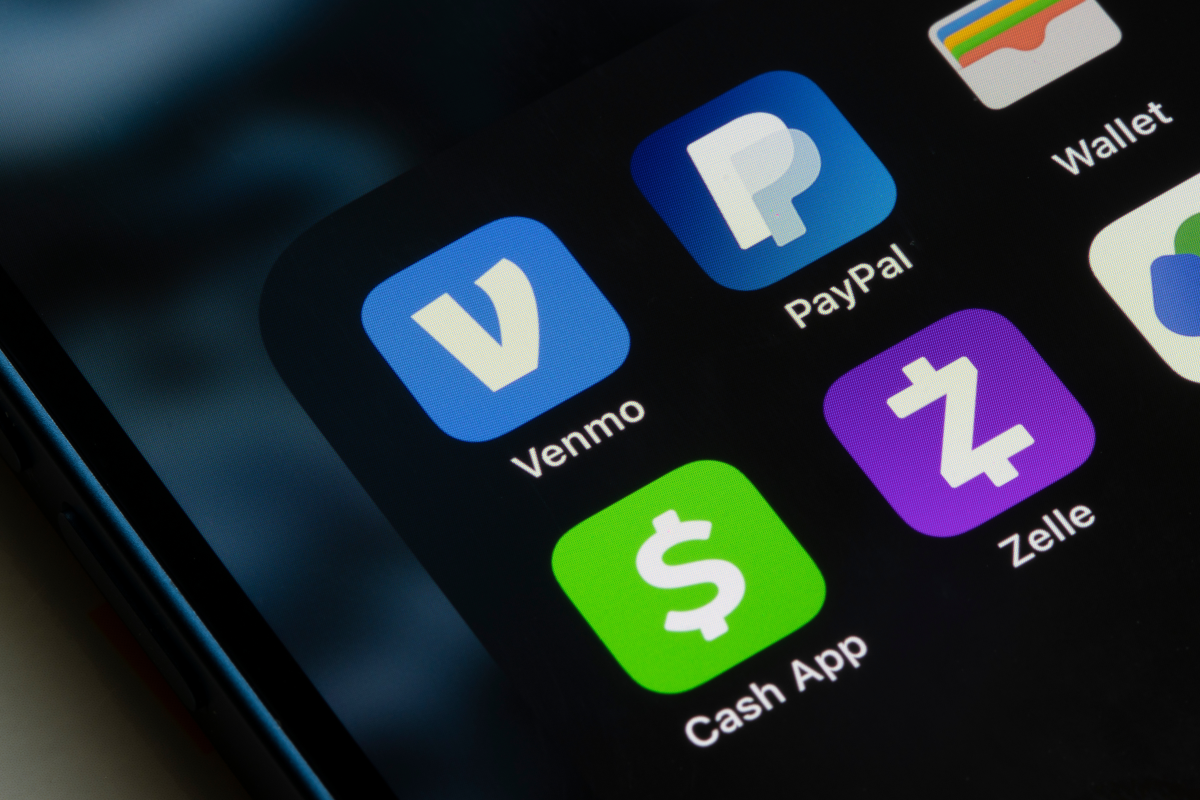
In recent decades, the traditional financial services offered by banks in the United States have been forced to evolve, driven by technology. In that sense, everything has been simplified: transactions that used to take place at a physical branch and that took a few hours can now be carried out from anywhere in just a few minutes, thanks to apps like Zelle and PayPal that, in addition to sending and receiving money between banks, allow other types of transactions, making people’s daily lives easier.
These apps not only offer convenience, due to their speed and the absence of fees for some services, they also offer security in transactions, ensuring people’s money is protected at all times.
The 5 most popular money-sending apps in the United States
Currently, most mobile banking apps offer similar services, with some differences between them. These differences stem from fierce competition, but they have allowed them to secure the top spots in popularity among users, thanks to their efficiency in addressing specific financial needs. Below are descriptions of some of them:
1. Zelle – Best option for those making transfers between banks
With a huge number of institutions affiliated with its services, Zelle has become the standout app for bank-to-bank transfers at no cost. Thanks to it, thousands of people send or receive money in seconds, whether from their bank’s mobile app or from the Zelle app itself, which is available on all platforms to be downloaded on phones and smart devices.
In addition to offering speed, Zelle is extremely secure and its app is recognized for being easy to use.
Key features:
– Allows bank transfers in seconds.
– The transactions conducted through this tool are insured by the federal government.
– Does not allow payments with credit cards, but allows linking debit cards and bank accounts.
– People whose bank is not affiliated with Zelle can also use the app, though this may be associated with fees.
– Only requires an email address and a U.S. phone number to enroll.
– Transaction limits can vary depending on the receiving bank.
– A U.S. savings or checking account is required to use the service, for both the sender and the recipient.
– At least 1,700 financial institutions are affiliated.
– There are no usage fees.
– It does not work with international banks.
2. PayPal – Best option for those seeking to diversify their payments
PayPal is particularly convenient due to all the options it offers: in addition to sending and receiving money, users can earmark funds for donations, receive payments for sales (if they run a business) or raise funds for a specific purpose. It even has a feature that lets users request payments from other users, in case of a loan or rent payment, maintaining privacy between parties without needing to exchange words.
Funds received in PayPal can be used for online purchases or direct payments to other PayPal subscribers.
Key features:
– People can create an account for free.
– PayPal transactions are not only fast but also secure.
– Its mobile app is easy to install and very user-friendly.
– Allows transferring money from the PayPal account to a U.S. bank account. However, it charges a 5% fee, which is considered high compared to other services.
– It has the PayPal Instant Transfer service that enables instant transfers for a fee.
– Allows cashing checks from anywhere with a fee.
– Allows investing in cryptocurrencies.
– Offers the option to receive payments ahead of time.
– Allows conducting transactions using a link or a QR code.
– Allows setting up direct deposits.
– Has a version designed specifically for businesses.
– When payments are made to the wrong account, refunds can be requested from the person. If there is no response, the user can file a claim with PayPal.
– Customer service is weaker compared to what can be received from other services or banking institutions.
– The mobile app is available on all download platforms.
3. Cash App – Best option for those seeking minimal fees
Among all money-sending apps, Cash App is one of the simplest to use because it focuses on sending or receiving payments with the lowest fees. Some transactions may be fee-free, and funds can be allocated to other options such as buying and selling cryptocurrencies or other investments.
Cash App can also be used by teenagers aged 13 and up and allows people to pay their taxes annually without any fee.
Key features:
– Although it focuses on sending and receiving payments, it offers users a good range of options to manage their money.
– Makes payments from its app, which is available on all download platforms.
– Cash App transactions are completely free. Therefore, it’s perfect for those seeking minimal service fees.
– Offers exclusive discounts to app users. These discounts may be available when making certain payments.
– Transfers are not instant. People receive the money in 1 to 3 business days.
– Allows linking credit and debit cards.
– If people make erroneous transfers, they can only wait for the recipient to refund them.
– Its app is among the easiest to use.
– Ideal for transactions between friends and family.
– Allows investing in Bitcoin.
– Allows investing in stocks.
4. Venmo – Best option for those seeking to split payments

Like PayPal, Venmo offers the ability to diversify payments through its platform, which allows users to send, receive, and also reserve money. However, it differs from other apps because it is much more social: Venmo is perfect for sharing expenses among friends or family. In that sense, when it comes to bills, basic services, rent, and the like, this app lets each person bear responsibility for a given amount.
At the same time, it is perfect for shared payments during a trip or a night out with friends.
Key features:
– In general, it functions as an intimate social network for splitting payments and transfers.
– It processes instant transactions, facilitating the flow of money.
– Transfers do not incur a fee.
– Allows transferring to bank accounts, but this benefit comes with a fee: 1.75% (minimum $0.25 and maximum $25).
– By its nature, it makes peer-to-peer operations more interactive.
– It has a spending limit of $299.99. People can raise the limit (up to $60,000 per week) if they verify their identity.
– As with other apps, claims can be filed for erroneous transfers, but refunds are not guaranteed.
– Although it allows people to secure their account with various options (such as multi-factor authentication), this app has been involved in reports of security issues in the past.
5. WorldRemit – Best option for those needing to make international transfers

WorldRemit is ideal for international transfers because it extends its reach to more than 130 countries. Most transactions are completed within minutes or up to 24 hours, but they come with fees. New users can enjoy an introductory promotion that lets them make their first three transfers without paying a fee, and once inside, the app provides reward coupons to people who bring others on board, benefiting both parties.
It also stands out for the ability to receive payments from other similar apps and because it allows linking credit, debit, and prepaid cards.
Key features:
– Allows linking credit, debit, or prepaid cards that are VISA or MasterCard.
– Allows users to send and receive transactions from other apps like Klarna, Trustly, POLi, Apple Pay, among others. It does not accept Google Pay.
– Its app is easy to use. You only need to download it from any platform, select the country, enter the transfer and recipient details.
– Sends alerts via text messages and email when transactions have been completed.
– Allows recovering money for erroneous transfers, as long as the user reports it as soon as possible.
– Transaction limits can vary considerably depending on the destination country.
– Charges fees for each transaction.