The Pan American Health Organization (PAHO) announced it on Tuesday, November 17. With the announcement, measles is once again considered endemic in the United States. Many Hispanic communities are now wondering whether they need an additional dose.
What does it mean that the U.S. lost the measles elimination status?
A country keeps that status when the virus does not circulate continuously within its borders for at least 12 months. PAHO concluded that in the United States the virus has been locally spreading for more than a year.
According to PAHO Director Dr. Jarbas Barbosa, the United States must submit in the coming weeks a corrective plan to recover the status. Mexico and Bolivia also lost theirs; Canada had lost it last year.
The numbers explain the decision. The CDC reports at least 5,412 confirmed cases in 2026 across 47 jurisdictions, more than double the 2,289 cases of 2025. It is the highest figure in more than three decades. Nearly 11% of patients have been hospitalized and at least 10 deaths have been recorded, according to state data. Experts believe the actual count is higher.
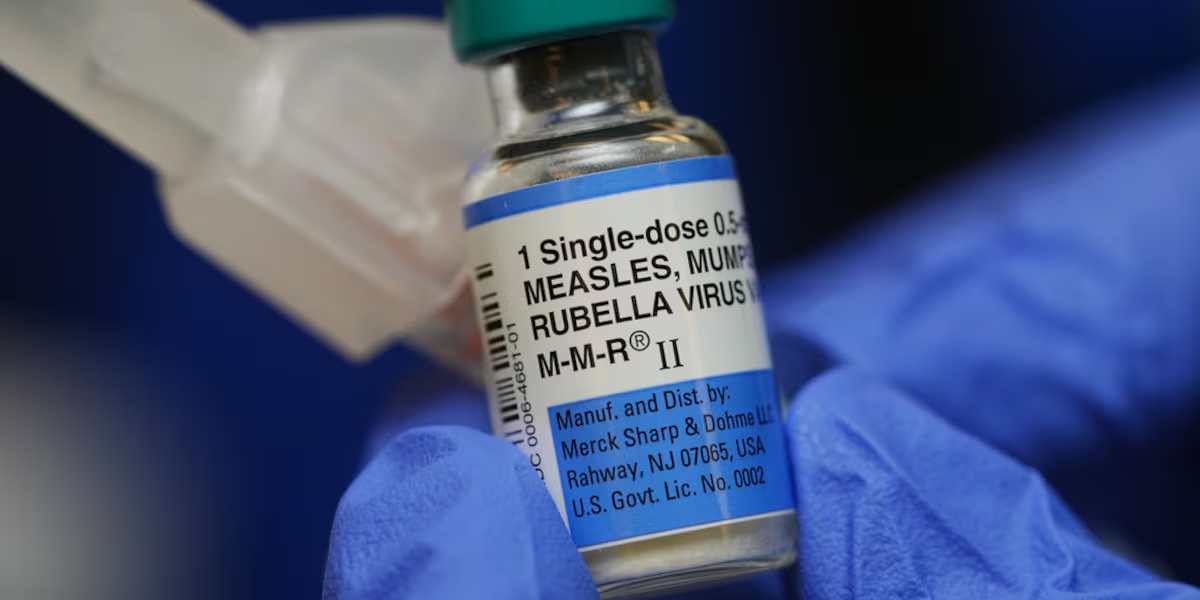
Who needs an additional dose of the measles–mumps–rubella vaccine (MMR)?
The good news is that most people are already protected. A single dose is 93% effective and two doses reach 97%. Those who have received two doses generally do not need a booster. The CDC recommends the first dose at 12–15 months and the second between ages 4 and 6.
Experts point to a few scenarios where it makes sense to talk with a physician:
- Vaccinated before 1968: early vaccines used inactivated virus and offered less protection. They may need a dose of the current vaccine.
- Who received only one dose before 1989: that year the second dose was recommended for children. They may consider completing the schedule.
- Those unsure whether they were vaccinated or who lost their vaccination card: a doctor can advise another dose. Dr. Jesse Goodman, of Georgetown University, says there’s no risk in getting vaccinated again if there is doubt.
- Born before 1957: the CDC considers them immune because most people had the disease as children. Health workers in this group should verify their protection.
Many doctors prefer to talk about “another dose” rather than “a booster.” The second dose was created to give a second chance to those who did not respond to the first. It is not because immunity weakens over time.
Measles: what to do if you were exposed and how to protect children
If you were in contact with someone who has measles, a vaccine administered within the first 72 hours can provide protection or lessen the severity of the illness. Blood tests can measure antibodies, but the CDC does not routinely recommend them, and physicians say they are not necessary if you already have two doses.
For children, the risk is higher. Goodman notes that between 1 in 5 and 1 in 10 young children with measles end up hospitalized. In areas experiencing outbreaks, some pediatricians recommend a “zero-dose” between 6 and 11 months, in addition to the two usual doses. The second dose can also be given earlier than age four if the pediatrician approves.
The measles vaccine is available at pediatric offices, pharmacies, and local health departments. If you lack health insurance, ask your local health department about low-cost or free options.
Back in 1963, measles caused roughly 3–4 million cases and 400–500 deaths each year in the United States. To curb transmission, about 95% of the population must be vaccinated. Checking your vaccination record or your children’s is the first step and takes only a few minutes. If you have questions, consult your doctor.