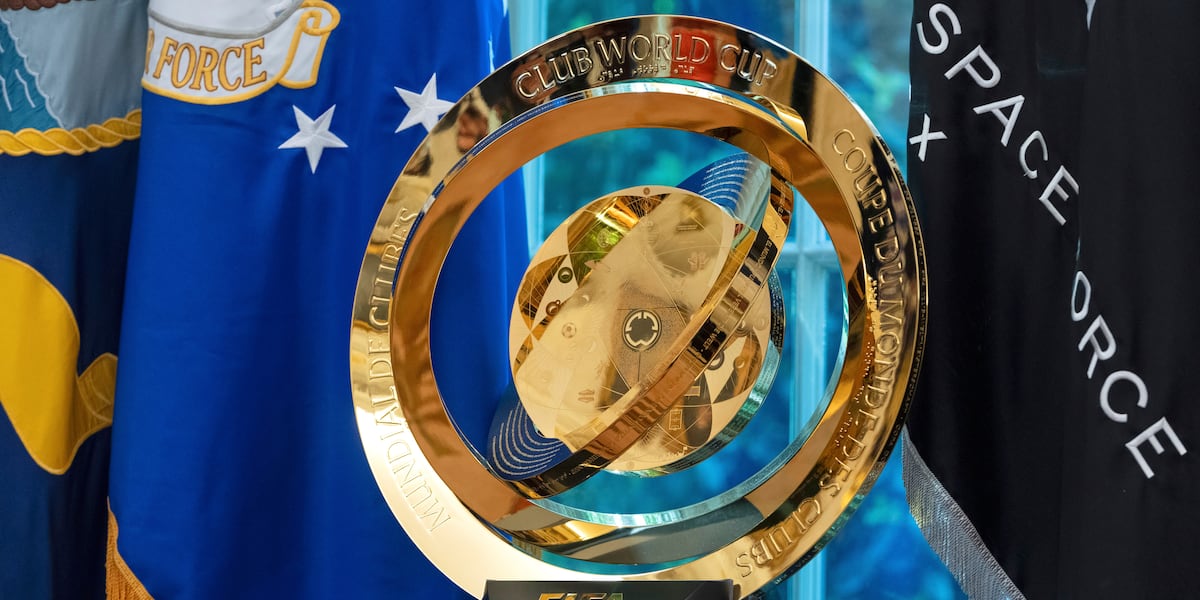
Based in the United States, this edition will mark a turning point not only for its new 32-team format spanning the six confederations but also for the astronomical prize pool FIFA has laid out: US$1 billion.
This new format represents a qualitative leap compared with earlier editions. From its debut in Brazil in 2000 with only eight teams, to the most recent in 2023 with Manchester City lifting the trophy in Saudi Arabia, the tournament has evolved in both scope and financial value.
Of that US$1 billion, a total of US$525 million is already secured for clubs simply for participating. FIFA has specified that this figure will be distributed based on sporting criteria, commercial considerations and the continent of origin of the club.
Europe will be the biggest beneficiary, with amounts ranging from US$12.81 million to US$38.19 million per club. It is followed by South America with US$15.21 million per team, while representatives from North America, Central America and the Caribbean, Asia and Africa will each receive US$9.55 million. Auckland City, the lone Oceanian participant, will take home US$3.58 million.
How do the round-by-round prizes work at the 2025 Club World Cup?
The real incentive will come from on-field performance. FIFA will allocate the remaining US$475 million to reward results across the 63 scheduled matches. Each group-stage victory will earn US$2 million, while advancing to the Round of 16 will add US$7.5 million.
Teams reaching the quarterfinals will win US$13.1 million, and reaching the semifinals will mean taking home US$21 million. The runner-up will receive US$30 million, but the eventual champion, crowned at MetLife Stadium in New Jersey on July 13, will take home a record US$40 million.
If a European club takes the title, accumulating prizes from wins and rounds advanced, it could total up to US$125 million in all. An unprecedented figure that reflects FIFA’s aim of elevating the tournament’s status and definitively seizing the tantalizing American market ahead of the 2026 World Cup, co-hosted by the United States, Mexico and Canada.
In addition, as part of its global solidarity program, FIFA will allocate US$250 million extra to clubs that failed to qualify, seeking to spur football development in every corner of the planet.
With figures that even surpass those of the FIFA World Cup for national teams, the new Club World Cup promises not only spectacular play but also a fierce race for the richest prize in the history of international football.