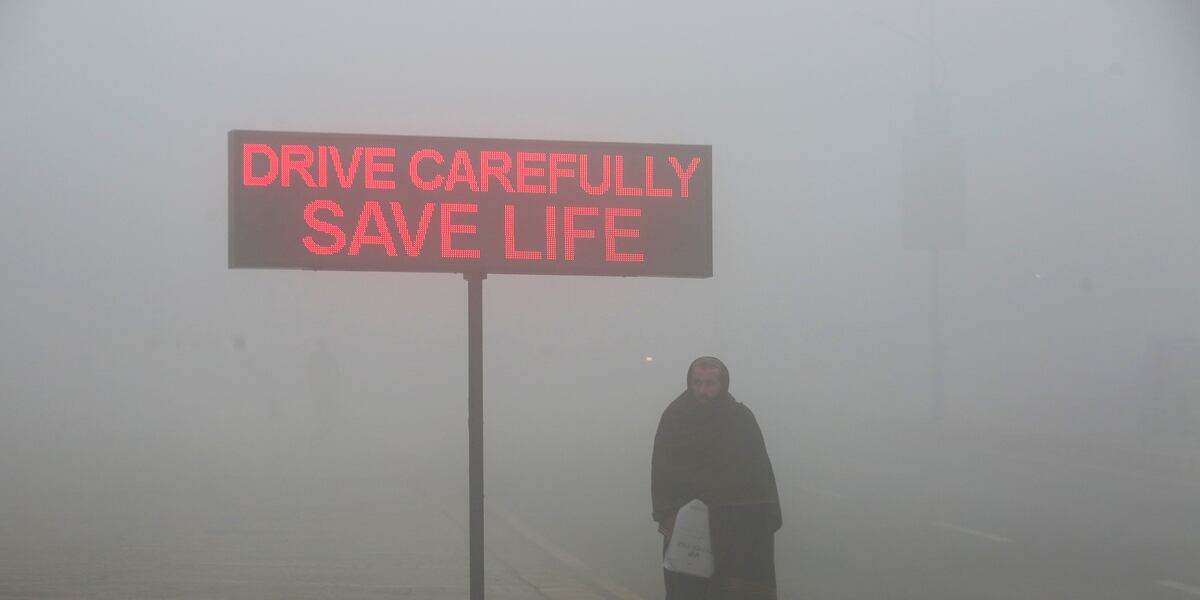
BENGALURU, India (AP) — Most of the world breathes polluted air, and only about 17% of cities globally meet the air quality guidelines, according to a report released on Tuesday.
IQAir’s Swiss-based air quality monitoring database analyzed data from 40,000 air quality monitoring stations across 138 countries and found Chad, the Congo, Bangladesh, Pakistan and India had the dirtiest air. In India, six of the nine most polluted cities are located in the country, with the industrial town of Byrnihat in the northeast identified as the worst.
Experts noted that the true amount of air pollution could be even higher, since many parts of the world lack the necessary monitoring systems to yield more precise data. In Africa, for example, there is only one monitoring station for every 3.7 million people.
More air quality monitoring stations are being installed to counter the problem, according to the report. This year, the authors were able to incorporate data from 8,954 new sites and about a thousand new monitors as a result of efforts to improve tracking of air pollution.
However, last week, data control over air pollution suffered a setback when the United States Department of State announced it would no longer publish data from its embassies and consulates around the world.
Breathing polluted air for an extended period can cause respiratory diseases, Alzheimer’s and cancer, said Fatimah Ahamad, a scientist and air pollution expert at the Sunway Planetary Health Center, based in Malaysia. The World Health Organization estimates that air pollution kills about seven million people each year.
Ahamad emphasized that much more needs to be done to reduce air pollution levels. The WHO had previously determined that 99% of the global population lives in places that do not meet the recommended air quality levels.
“If you have poor-quality water, or you have no water, you can tell people to wait half an hour a day and the water will arrive. But if you have poor-quality air, you can’t tell people to stop breathing,” she said.
Cities such as Beijing, Seoul and Rybnik, in Poland, have successfully improved air quality thanks to tougher rules on vehicle, power plant and industrial emissions. They have also promoted cleaner energy and invested in public transportation.
Another notable effort to curb severe air pollution was the Southeast Asian Nations’ agreement on transboundary air pollution. While it has had limited success so far, ten regional countries pledged to work together to monitor and reduce pollution caused by large wildfires, a common phenomenon in the region during the dry seasons.
Shweta Narayan, campaign lead for the Global Alliance for Climate and Health, said many of the regions experiencing the worst air pollution are also places where large amounts of planet-warming gases are released through burning coal, oil and gas. Cutting those emissions to slow warming can also improve air quality, she said.
Air pollution and the climate crisis are “two sides of the same coin,” she noted.