NEW YORK (AP) — For the first time in 30 years, the American Academy of Pediatrics has moved substantially away from U.S. government vaccine guidance.
The group’s new COVID-19 recommendations — released on Tuesday — arrive in a turbulent year for public health, as vaccine skeptics have risen to power in the new Trump administration and government guidelines have grown increasingly confusing.
“This isn’t going to help,” admitted Dr. James Campbell, vice chair of the AAP’s Infectious Diseases Committee.
“It’s going to be confusing. But our view is that we need to make the right decisions to protect children,” he added.
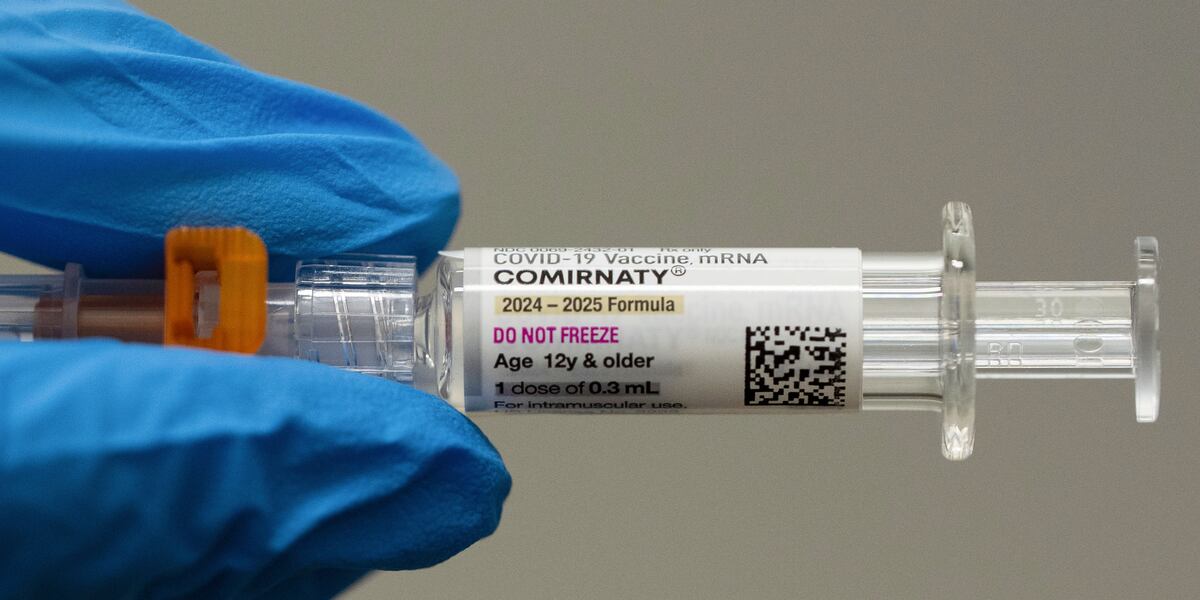
The AAP strongly recommends the COVID-19 vaccines for children six months to two years old. They are also advised for older kids if parents want their children immunized, he added.
This differs from the guidance laid out by Health Secretary Robert F. Kennedy Jr., who does not recommend them for healthy children of any age, but says they may be given after consulting a physician.
Children aged six months to two years are at high risk of severe illness from COVID-19, and it was important that the recommendations continued to stress the need for vaccination, Campbell, an infectious-disease expert at the University of Maryland, said.
Vaccination is also recommended for older children with chronic lung disease or other conditions that put them at higher risk of severe disease, the AAP noted.
The organization, based in Itasca, Illinois, with 95 years under its belt, has issued vaccination guidelines for children since the 1930s. In 1995, it synchronized its advice with the federal Centers for Disease Control and Prevention (CDC).
There have been some minor differences between its recommendations since then. For example, the AAP has advised HPV vaccines starting at age nine, while the CDC says it’s acceptable but recommends waiting until 11 and 12 years old.
But in 30 years, this is the first time the recommendations diverge “in a meaningful or substantial way,” Campbell said.
Until recently, the CDC — following infectious-disease experts — had urged Americans from six months on to receive annual boosters against COVID-19.
But Kennedy announced in May that COVID vaccines are no longer recommended for healthy children and pregnant women. A few days later, the CDC issued a statement indicating that healthy children can receive the vaccines, but it is no longer recommended.
The notion that healthy older children could skip COVID-19 boosters has been brewing for some time among public health experts. As the COVID-19 pandemic waned, experts have debated focusing vaccination efforts on people 65 and older, who are among those at greatest risk of death and hospitalization.
A CDC expert panel in June was ready to make recommendations for fall vaccines. Among the options under consideration was whether to suggest vaccines for high-risk groups while offering an option to low-risk individuals to get vaccinated.
But Kennedy bypassed the panel and also decided to dissolve the 17-member panel and appoint his own smaller panel, which included vaccine skeptics. He later also excluded the AAP, the American Medical Association, and other major medical organizations from working with the advisers to set vaccination guidance.
The new Kennedy vaccine panel has not yet voted on recommendations for COVID-19. It has, however, endorsed maintaining the fall flu vaccination recommendation, but also made a decision that led to another notable divergence with the AAP.
The new advisory panel voted that people should only receive influenza vaccines that come in single-dose vials and do not contain the preservative thimerosal.
The AAP said there is no evidence of harm from the preservative and recommended that clinicians use any licensed flu product that is appropriate for the patient.