
If you worked during the year, you have children, and when you do the math you discover you don’t owe money to the IRS, there’s still a worthwhile possibility to check: you could receive a refund thanks to family tax credits. It’s not about a stimulus check or automatic assistance. They are tax benefits that can put money back in your pocket if you meet the requirements.
Two of the most important ones are the Child Tax Credit (CTC) and the Earned Income Tax Credit (EITC). The difference lies in how they work and who can claim them.
How much can you receive per child even if you don’t owe taxes?
For the 2025 tax year, filed in 2026, the Child Tax Credit can reach up to $2,200 per qualifying child. However, not the entire amount is paid out in cash.
The portion that can become a refund is known as the Additional Child Tax Credit (ACTC). The IRS allows recovering up to $1,700 per child, provided you meet the conditions. One of these is having at least $2,500 in earned income.
This is important: if your federal tax liability is zero, you could still receive the refundable portion of the credit. But that doesn’t mean any parent can automatically claim the $1,700.
The IRS states that the child must be under 17 years old at year-end, live with you for more than half the year, and meet the rules to be considered a dependent. It also requires valid Social Security numbers to work in the United States, for both the child and the taxpayer claiming the benefit, with a specific rule for married couples filing jointly.
You can review the full requirements on the IRS official Child Tax Credit page.
What other credit can give you a refund even if your tax is zero?
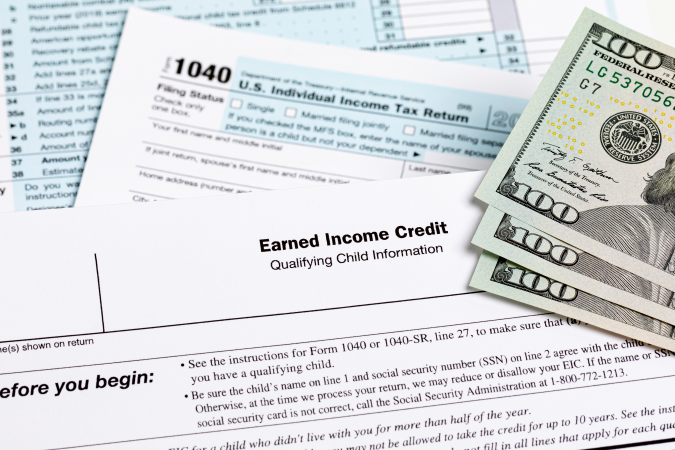
The Earned Income Tax Credit (EITC) is aimed at workers and families with low or moderate incomes. Unlike other benefits that only reduce what you owe, this credit is refundable: if you qualify, you can receive money even if you don’t owe any tax.
For the 2025 tax year, the IRS set these maximum amounts:
They are not guaranteed amounts. The amount depends on your income, filing status, and the number of qualifying children. For example, for a single person with three children, the adjusted gross income must be under $61,555. For married couples filing jointly, the limit rises to $68,675.
Additionally, you must have earned income and meet residency and Social Security requirements. The IRS explains the conditions in its EITC guide.
What should you do to claim these tax credits?
The first step is to file your federal return, even if your income is so low that you wouldn’t normally be required to file. The IRS warns that some eligible people miss these refunds precisely because they don’t file their taxes.
Before doing so, review three points:
You can also use the IRS’s free tools to review your eligibility. If you claim the EITC or the ACTC, remember that the agency cannot issue those refunds before mid-February.
For many working Latino families who stretch every dollar of the budget, letting these credits slip by can mean missing a substantial amount of money. Not having a federal tax debt shouldn’t be the reason to skip checking whether you qualify for a refund.